Bhagavad Gita - Chapter 12: Bhakti Yoga (The Yoga of Devotion)
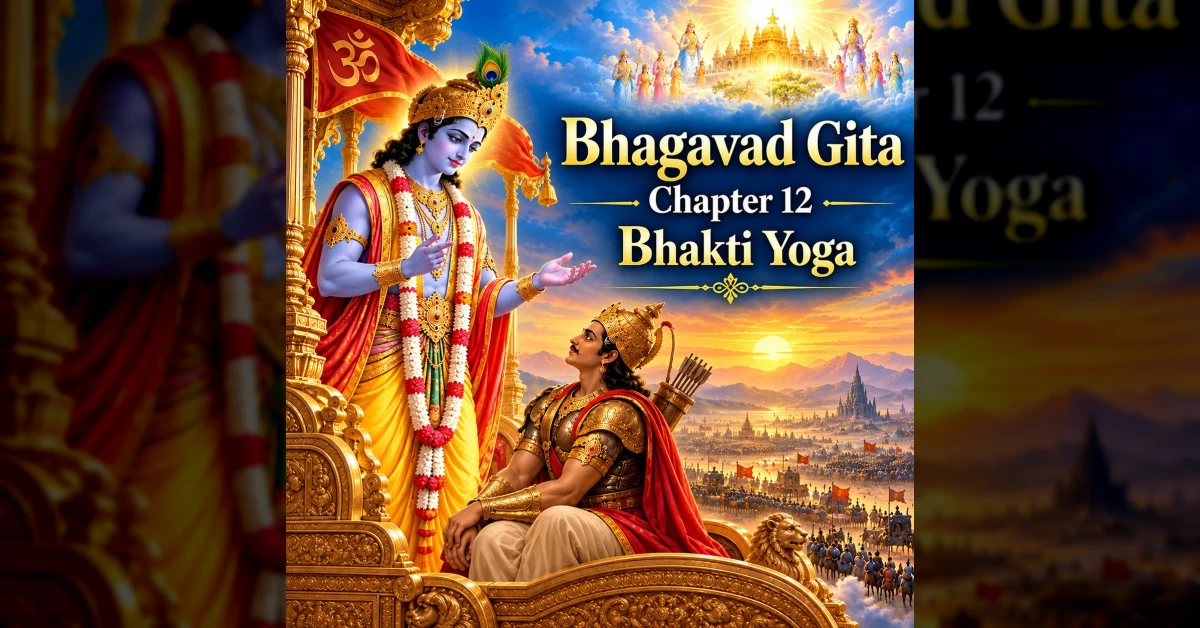
Verse 1
Arjuna uvāca:
evaṁ satata-yuktā ye bhaktās tvāṁ paryupāsate |
ye cāpy akṣaram avyaktaṁ teṣāṁ ke yoga-vittamāḥ || 1 ||
Meaning: Arjuna asked: Those devotees who are constantly engaged in Your loving service and worship You, and those who worship the unmanifested, imperishable Absolute—which of these is more versed in yoga?
Verse 2
Śrī-bhagavān uvāca:
mayy āveśya mano ye māṁ nitya-yuktā upāsate |
śraddhayā parayōpetās te me yuktatamā matāḥ || 2 ||
Meaning: The Supreme Lord said: Those who fix their minds on Me and are always engaged in worshipping Me with supreme faith, I consider to be the most perfect yogis.
Verse 3
ye tv akṣaram anirdeśyam avyaktaṁ paryupāsate |
sarvatragam acintyaṁ ca kūṭastham acalaṁ dhruvam || 3 ||
Meaning: But those who worship the imperishable, indefinable, unmanifested, all-pervading, inconceivable, unchanging, immovable, and eternal Absolute...
Verse 4
sanniyamyendriya-grāmaṁ sarvatra sama-buddhayaḥ |
te prāpnuvanti mām eva sarva-bhūta-hite ratāḥ || 4 ||
Meaning: Restraining all the senses, even-minded everywhere, and devoted to the welfare of all beings, they also attain Me alone.
Verse 5
kleśo 'dhikataras teṣām avyaktāsakta-cetasām |
avyaktā hi gatir duḥkhaṁ dehavadbhir avāpyate || 5 ||
Meaning: For those whose minds are attached to the unmanifested Absolute, the struggle is far greater; because progress along the unmanifested path is difficult for embodied beings to attain.
Verse 6
ye tu sarvāṇi karmāṇi mayi sannyasya mat-parāḥ |
ananyenaiva yogena māṁ dhyāyanta upāsate || 6 ||
Meaning: But those who surrender all actions to Me, regarding Me as the supreme goal, worshipping and meditating on Me with unswerving devotion...
Verse 7
teṣām ahaṁ samuddhartā mṛtyu-saṁsāra-sāgarāt |
bhavāmi na cirāt pārtha mayy āveśita-cetasām || 7 ||
Meaning: For those whose minds are absorbed in Me, O Partha, I become the swift deliverer from the ocean of birth and death.
Verse 8
mayy eva mana ādhatsva mayi buddhiṁ niveśaya |
nivasiṣyasy ata ūrdhvaṁ na saṁśayaḥ || 8 ||
Meaning: Fix your mind on Me alone, and seat your intellect in Me. Thereafter, you will live in Me without a doubt.
Verse 9
atha cittaṁ samādhātuṁ na śaknoṣi mayi sthiram |
abhyāsa-yogena tato mām icchāptuṁ dhanañjaya || 9 ||
Meaning: If you are unable to fix your mind steadily on Me, O Dhananjaya, then seek to reach Me through the practice of repeated effort (Abhyasa Yoga).
Verse 10
abhyāse 'py asamarthō 'si mat-karma-paramo bhava |
mad-artham api karmāṇi kurvan siddhim avāpsyasi || 10 ||
Meaning: If you are unable even to practice this, dedicate all your actions to Me. By performing work for My sake, you will attain perfection.
Verse 11
athaitad apy aśakto 'si kartuṁ madyogam āśritaḥ |
sarva-karma-phala-tyāgaṁ tataḥ kuru yatātmavān || 11 ||
Meaning: If you are unable to do even this, then take refuge in My devotion and, self-controlled, renounce the fruits of all your actions.
Verse 12
śreyo hi jñānam abhyāsāj jñānād dhyānaṁ viśiṣyate |
dhyānāt karma-phala-tyāgas tyāgāc chāntir anantaram || 12 ||
Meaning: Better than practice without understanding is knowledge; better than knowledge is meditation; and better than meditation is the renunciation of the fruits of action, for peace immediately follows such renunciation.
Verse 13
adveṣṭā sarva-bhūtānāṁ maitraḥ karuṇa eva ca |
nirmamo nirahaṅkāraḥ sama-duḥkha-sukhaḥ kṣamī || 13 ||
Meaning: One who harbors no ill will toward any living being, who is friendly and compassionate, free from possessiveness and ego, equal in joy and sorrow, forgiving...
Verse 14
santuṣṭaḥ satataṁ yogī yatātmā dṛḍha-niścayaḥ |
mayy arpita-mano-buddhir yo mad-bhaktaḥ sa me priyaḥ || 14 ||
Meaning: Always contented, self-controlled, firm in resolve, with mind and intellect surrendered to Me—such a devotee is extremely dear to Me.
Verse 15
yasmān nodvijate loko lokān nodvijate ca yaḥ |
harṣāmarṣa-bhayodvegair mukto yaḥ sa ca me priyaḥ || 15 ||
Meaning: One by whom the world is not disturbed, who is not disturbed by the world, and who is free from excessive joy, envy, fear, and anxiety—such a person is dear to Me.
Verse 16
anapekṣaḥ śucir dakṣa udāsīno gata-vyathaḥ |
sarvārambha-parityāgī yo mad-bhaktaḥ sa me priyaḥ || 16 ||
Meaning: One who is free from expectations, pure, capable, impartial, free from anxiety, and has relinquished the spirit of doership—such a devotee is dear to Me.
Verse 17
yo na hṛṣyati na dveṣṭi na śocati na kāṅkṣati |
śubhāśubha-parityāgī bhaktimān yaḥ sa me priyaḥ || 17 ||
Meaning: One who neither rejoices nor hates, neither grieves nor desires, and who renounces both good and bad fortune—such a devoted person is dear to Me.
Verse 18
samaḥ śatrau ca mitre ca tathā mānāpamānayoḥ |
śītoṣṇa-sukha-duḥkheṣu samaḥ saṅga-vivarjitaḥ || 18 ||
Meaning: One who is equal to friend and foe, balanced in honor and dishonor, heat and cold, pleasure and pain, and free from attachment...
Verse 19
tulya-nindā-stutir maunī santuṣṭo yena kenacit |
aniketaḥ sthira-matir bhaktimān me priyo naraḥ || 19 ||
Meaning: One who takes praise and blame equally, is contemplative, satisfied with whatever comes, unattached to home, and steady in mind—such a devotee is dear to Me.
Verse 20
ye tu dharmāmṛtam idaṁ yathoktaṁ paryupāsate |
śraddadhānā mat-paramā bhaktās te 'tīva me priyāḥ || 20 ||
Meaning: But those who cherish this immortal wisdom taught here, endowed with faith and holding Me as the supreme goal—those devotees are exceedingly dear to Me.